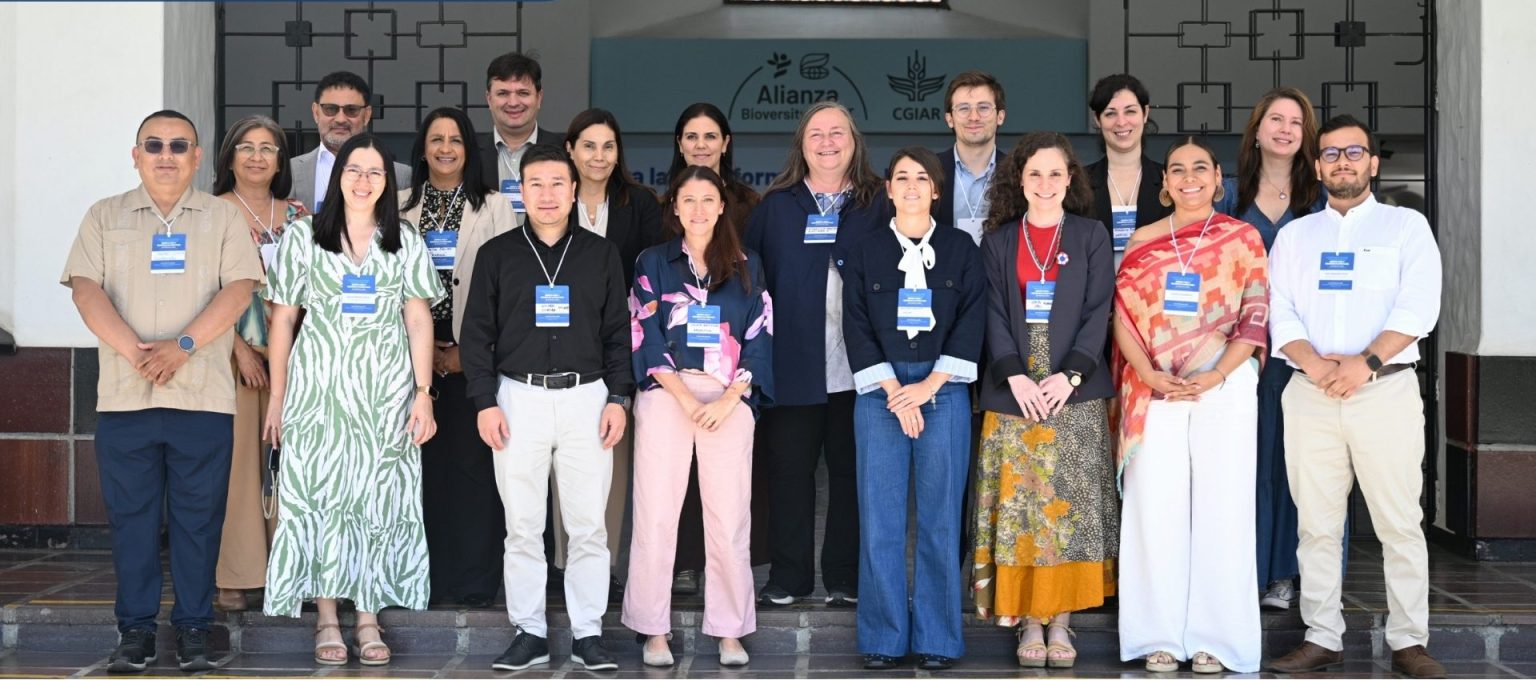
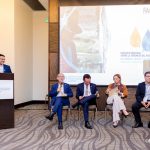
May 15, 2026. The event brought together government representatives, agricultural negotiators, and technical experts with a strategic goal: to strengthen the region’s capacity to influence global climate decisions that will shape the future of the agri-food sector. This effort is in preparation for the major climate meetings of the year, such as the 64th Session of the Subsidiary Bodies of the United Nations Framework Convention on Climate Change (UNFCCC) in Bonn (SB64, June 2026) and the Conference of the Parties on Climate Change (COP 31) in Antalya, Turkey (November 2026).
The meeting was led by the Food and Agriculture Organization of the United Nations (FAO), the Platform of Latin America and the Caribbean for Climate Action on Agriculture (PLACA), and the Alliance of Bioversity International and CIAT.
During the three-day workshop, through specialized sessions, negotiators received guidance on issues related to the legal and procedural architecture of the UNFCCC, priorities leading up to COP31 with an emphasis on agriculture and food security, and reviewed progress related to the Global Adaptation Goal and its application to the agri-food sector, the loss and damage framework with an emphasis on methodologies and monitoring systems, and the effective integration of agriculture into Nationally Determined Contributions (NDCs) and National Adaptation Plans (NAPs).
As a central focus of the dialogue, opportunities were provided for negotiators from the region to develop a shared position, with the aim of arriving in Bonn not only with assessments but also with concrete, prioritized technical proposals addressing the gaps and implementation needs of the agri-food sector.
The urgency of the meeting is backed by data. According to FAO data, 2024 was the warmest year on record in the region, with temperatures 1.47°C above the historical average. Climate uncertainty impacts livelihoods and food security in a regional context where more than 33 million people still suffer from hunger and 167 million face food insecurity.
“Strengthening negotiating capacities in agriculture and food security is a strategic priority for our region. Forums like this dialogue are essential for countries to arrive better prepared, with greater technical clarity and stronger positions at key events such as SB64 in Bonn next month and COP31 in November,” said Melvin Medina, Senior Officer for Land and Water and Coordinator of the Better Environment initiative at the FAO.
The work does not end with this meeting. Through PLACA, the FAO, in its capacity as Secretariat, will continue to facilitate opportunities for dialogue and exchange that will help move the region toward greater preparedness and coordination. PLACA has established itself as the key regional technical-policy mechanism for coordinating positions, promoting regional cooperation, and supporting ministries of agriculture in their effective participation in the climate agenda.
The importance of conventions
The meeting comes at a critical juncture. The Sharm el-Sheikh Joint Work Programme on Climate Action in Agriculture and Food Security (SJWA), adopted at COP27, will come to a close at COP31, scheduled to take place in 2026 in Antalya, Turkey.
Given this situation, in which a decision must be made on which path to take, it is in the best interest of Latin America and the Caribbean to present a unified front and concrete proposals.
This dialogue is part of the FAO’s support for countries in their agricultural negotiations and the implementation of climate action, made possible by a contribution from the German Federal Ministry for Economic Cooperation and Development (BMZ).