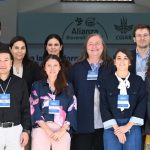
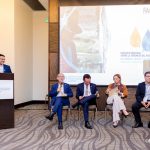
During the event “Bioeconomy and Climate Change in the International Year of the Woman Farmer,” the Platform reaffirmed its role as a regional mechanism for strengthening institutional capacities and improving the implementation of Nationally Determined Contributions in Latin America and the Caribbean.
February 2026.- En el marco del evento “Bioeconomía y cambio climático en el Año Internacional de la Agricultora», realizado el 11 y 12 de febrero en Lima, Perú, se llevó a cabo el panel “Panorama regional para planificar, ejecutar y evaluar medidas NDC del sector agrario con participación activa de mujeres”. Este espacio reunió a representantes de ministerios de agricultura de la región y organismos internacionales, con el objetivo de analizar oportunidades de cooperación y alineación de políticas en el marco de la acción climática agraria.
During this panel, Peru—through MIDAGRI and in its capacity as Chair of the Platform of Latin America and the Caribbean for Climate Action on Agriculture (PLACA)—reaffirmed its commitment to strengthening regional coordination in order to harmonize methodologies, share lessons learned, and bridge gaps in the sector.
During the panel discussion, participants explored how regional platforms, such as PLACA, can help harmonize approaches, methodologies, and strategies to help bridge gaps in the agricultural sector, highlighting the importance of regional cooperation and technical exchange for decision-making.
Gabriela Quiroz, director of the Department of Natural Resource Assessment and Climate Change at MIDAGRI, noted that PLACA has established itself as the only regional mechanism led by ministries of agriculture to strengthen institutional capacities and support the implementation of NDCs. “As the chair of PLACA, we are promoting agricultural climate action that combines productivity, sustainability, and equal opportunities,” she said.
In addition, according to a recent study synthesizing experiences in monitoring and evaluating climate change adaptation and mitigation measures in the agricultural sector of PLACA member countries, there is evidence of both progress and challenges in updating climate commitments.
The study notes that all countries have national climate change adaptation plans and that several have developed specific instruments for the agricultural sector, recognizing its importance to GDP and food security. These developments reflect the growing priority placed on integrating climate action into agricultural policies and strengthening monitoring and evaluation systems to improve the implementation of these measures.
In this context, PLACA will continue to promote technical exchange, regional cooperation, and capacity building as key pillars for advancing toward more resilient, sustainable, and inclusive agri-food systems in Latin America and the Caribbean.