


PLACA is consolidating its role as a regional platform to strengthen climate action and promote the agriculture sector’s participation in climate negotiations leading up to COP31
- News
-
Jul 03
- Share post
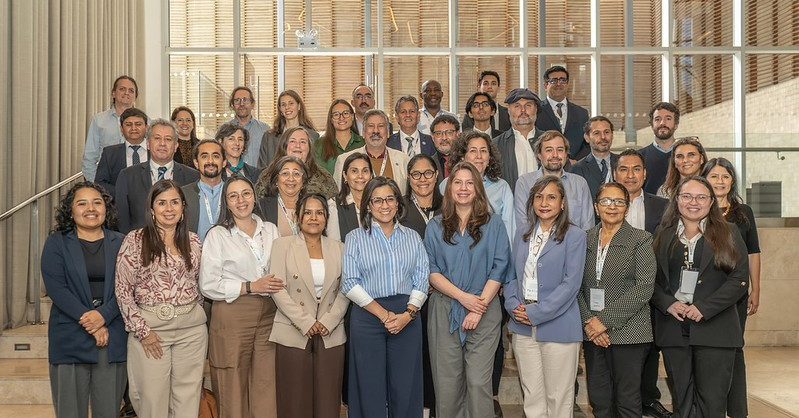
With technical support from the FAO, representatives from the 19 member countries of the Platform of Latin America and the Caribbean for Climate Action on Agriculture (PLACA) identified regional priorities related to the agricultural sector and discussed funding opportunities from the Green Climate Fund.
Lima, July 3, 2026.- The Platform of Latin America and the Caribbean for Climate Action on Agriculture (PLACA) concluded its Annual Assembly today in Lima, Peru. The platform brings together representatives from 19 countries in the region, and the Food and Agriculture Organization of the United Nations (FAO) serves as its secretariat.
At the event, participating countries reaffirmed the importance of strengthening regional coordination and technical capacities to ensure more effective participation by the agriculture and livestock sector in international climate negotiations leading up to the next United Nations Climate Change Conference, COP31, to be held in November in Turkey.
During the PLACA Assembly, officials and focal points from the Platform analyzed the role of agriculture within the framework of the United Nations Framework Convention on Climate Change (UNFCCC), exchanged experiences on climate finance, and identified common priorities for strengthening the resilience of agri-food systems in Latin America and the Caribbean.
Likewise, Peru, as the outgoing chair, presented the main achievements made during its term, notably the proposal for a regional concept note on water harvesting and storage, which aims to produce tangible results in terms of impact assessment methodologies, blended finance models, and a portfolio of technically sound projects.
In addition, the PLACA presidency was transferred to Brazil. Upon assuming this leadership role, Brazil reaffirmed its commitment to continue strengthening agriculture’s regional standing on the international climate agenda and to carry forward the process initiated by Peru regarding sustainable water management. Within this framework, the 2026–2027 Work Plan approved by the Assembly prioritizes support for all segments of rural producers, with special attention to small and medium-sized farmers, and incorporates water security and soil and water conservation as strategic pillars for improving agricultural and livestock productivity, strengthening resilience to climate change, and promoting more sustainable agriculture in the region.
As a new initiative promoted by the Brazilian presidency, the Work Plan incorporates the RAIZ (Resilient Agriculture Investment for Net-Zero Land Degradation) initiative, presented at COP30, which aims to attract resources for the implementation of climate change adaptation and mitigation actions. Conceived as an investment accelerator through international cooperation for the restoration of degraded lands, RAIZ seeks to connect governments, financial institutions, multilateral organizations, and the private sector to expand access to climate finance in agriculture, in line with the objectives of the FAST Partnership initiative, coordinated by the FAO, of which PLACA has been a member since its inception.
Capacity building
With technical support from the FAO, PLACA continues to establish itself as a regional cooperation mechanism that promotes knowledge sharing, capacity building, and coordination among countries to advance a common climate action agenda in agriculture.
Participants emphasized the importance of strengthening the technical capacities of ministries of agriculture and promoting opportunities for exchange that would enable countries in Latin America and the Caribbean to be better prepared for events such as the Bonn intersessional meetings and the Conferences of the Parties (COP).
“Through its self-paced courses, PLACA has trained more than 4,200 people on key topics related to climate action in agriculture, including international climate change negotiations, rural extension, climate change adaptation, and systems for monitoring and evaluating adaptation measures. More than 85% of those trained work in the Ministries of Agriculture of member countries, thereby contributing to the strengthening of institutional capacities for the implementation of their climate commitments,” said René Orellana, Assistant Director-General and FAO Regional Representative for Latin America and the Caribbean.
Climate finance
The Assembly also discussed opportunities to expand access to climate finance in the region. As part of this effort, a workshop was held to analyze mechanisms and experiences related to the Green Climate Fund (GCF), including readiness initiatives and multi-country proposals aimed at strengthening the resilience of agri-food systems.
Since 2018, nearly $700 million from the Global Environment Facility (GEF) and the Green Climate Fund (GCF) has been mobilized, with assistance from the FAO, for programs related to agri-food systems in 32 countries in the region.
About PLACA
Since its creation during COP25, PLACA has established itself as a technical-policy mechanism, promoting exchange among ministries of agriculture, capacity building, and knowledge generation to advance toward agri-food systems that are more sustainable, resilient, and adapted to climate change.
Currently, it brings together representatives from the ministries of agriculture of Argentina, the Bahamas, Dominican Republic, Belize, Bolivia, Brazil, Chile, Colombia, Costa Rica, Ecuador, El Salvador, Guatemala, Haiti, Honduras, Mexico, Panama, Paraguay, Peru, and Uruguay to support national and regional strategies related to climate action in agriculture.
Related news

- X
- Viber
- Telegram
- Tumblr
- VKontakte
- Copy link
- Share via...
- Threads
- Bluesky
📬
Subscribe to the Newsletter
Subscribe to PLACA's biannual newsletter and receive information on:
✓ Events and activities
✓ Training opportunities
✓ Documents and information resources generated
✓ News related to climate action
No spam · Cancel anytime